Whoa!
Okay, so check this out—I’ve bounced around a few Solana explorers. My instinct said one tool would do it all, but that rarely happens. Initially I thought Solscan was just another block explorer, but then I started tracking NFTs and wallet flows and things got interesting. On one hand it’s fast and uncluttered, though actually the way it surfaces token activity is what sold me. I’m biased, but the UX feels like someone who actually used Solana built it, not a committee.
Really?
Here’s the thing. Solana moves fast and your explorer better keep up. Solscan tends to refresh with minimal lag and the transaction details are granular without being a mess. Something felt off about other explorers when I hunted for cross-program activity; many hide the connections or require a dozen clicks. The visual breakdowns on Solscan make the relationships—like cross-contract token movements—much clearer, which matters if you care about provenance or suspicious flows.
Hmm…
On NFT tracking, the differences really show. Solscan surfaces NFT metadata, collection links, and recent sales in a way that keeps the story together instead of scattered bits. I dug into a handful of mints last month (oh, and by the way I got a tiny whale alert) and being able to jump from mint transaction to holder history saved me time. The NFT pages group activity logically, which helps when you’re trying to figure out who the early holders were and whether a collection is being peeled off quickly.
Whoa!
Let me walk through a real pattern I see often. You start at a suspicious transfer, then trace back through token accounts and creator addresses, and suddenly you learn a bunch about marketplace behavior. Initially I thought those chains were opaque, but the tools on Solscan make the chain readable. Actually, wait—let me rephrase that: Solscan doesn’t magically simplify fraud analysis, but it gives a lot of the raw signals you need, and that changes the game. My gut says you can do competent sleuthing there without being an on‑chain detective.
Seriously?
There are small things that matter more than you expect. Search by token address, then view token holders and you see distribution at a glance. The holder list and pie‑chart snapshots are quick to interpret, which is helpful if you’re spot‑checking rug‑pull risk. I like that the interface doesn’t punish you for digging deeper; clicking through maintains context rather than bouncing you around. That continuity makes it usable for both casual browsing and deeper audits.
Wow!
Performance wise, Solscan is snappy even when the network spikes. It caches intelligently and avoids unnecessary reloads, which reduces the “wait and pray” feeling. On Solana nights (you know, when the mempool gets chatty) a lagging explorer becomes nearly useless. Solscan’s latency profile kept me calm during one token launch that went off the rails and I could still follow the mint stream in real time.
Oh!
There are limits though. The analytics suite isn’t as advanced as a full forensic dashboard and sometimes the export options feel basic. I’m not 100% sure what their long‑term data retention policy is for certain aggregated stats, which bugs me a little. On the other hand the fundamentals are solid and for many users that’s enough. Also somethin’ about the CSV exports could be improved—very very important for auditors and creators.
Really?
Integration is another angle most people miss. Solscan links transaction IDs to token pages, program accounts, and sometimes marketplace listings, which speeds up context building. I noticed that when I wanted to verify a royalty split or trace a creator payout, the chain of links saved me manual searching. The way it exposes program logs and simulated instructions is helpful when a tx fails and you need the why, not just the what.
Whoa!
Okay—here’s a slightly nerdy part: program interaction visualization. Some explorers show logs but don’t map them to accounts and tokens neatly. Solscan does. That mapping matters when you’re parsing cross-program invocations, which are increasingly common on Solana. My instinct said mapping would be overkill, but it ends up being very useful when troubleshooting or teaching newcomers about transfer semantics.
Hmm…
Community features are underrated. The explorer surfaces links to creators and collections, and that builds a narrative around tokens. It helps collectors and curious devs see lineage. I’m biased toward explorers that educate users instead of just dumping raw bytes at them. This part feels community friendly—like a neighborhood record of activity rather than an impersonal ledger. It matters if you want adoption beyond traders and coders.
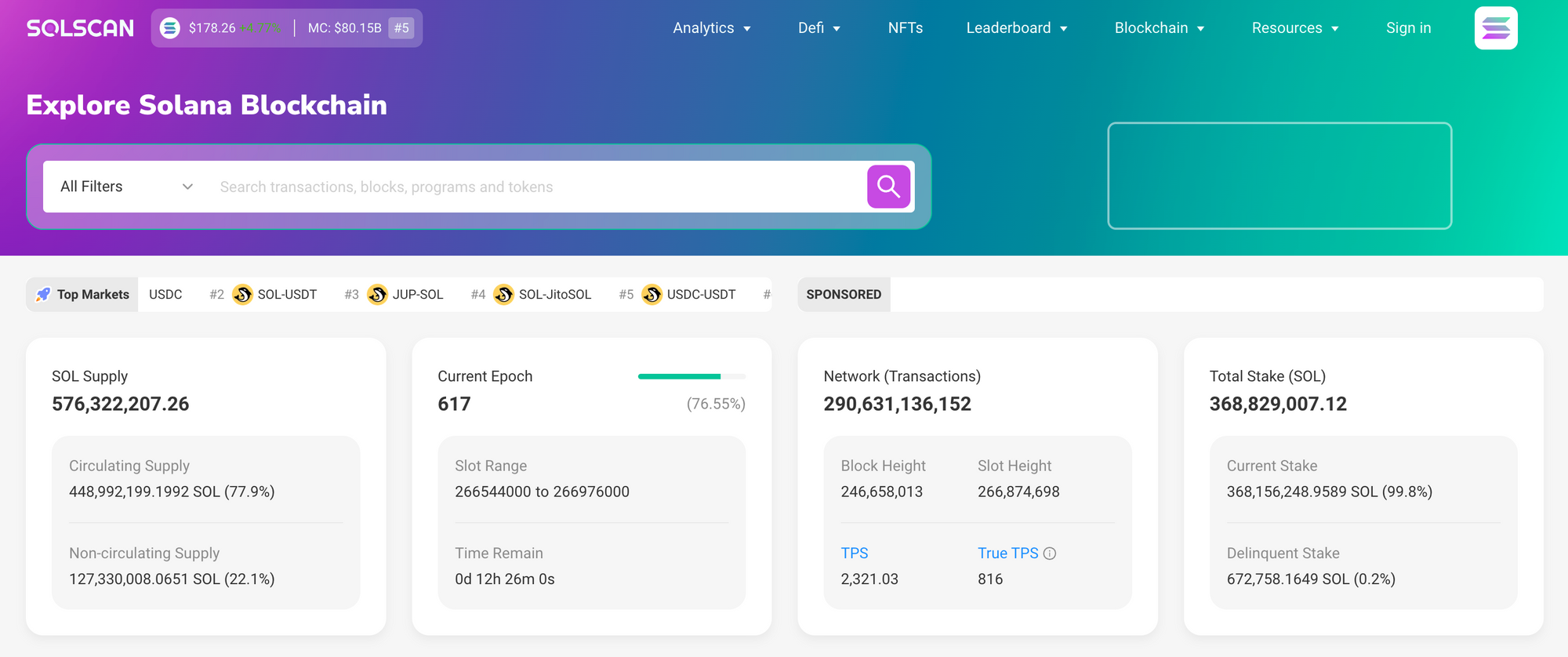
Where to go next with Solscan
If you’re ready to check it out I recommend starting on a token page, then tracing holders and transactions, and finally exploring program logs when you hit oddities. For hands‑on users the explorer becomes a research hub rather than just a lookup tool. You can try the solscan explorer and poke around wallets, mints, and program activity to see what I mean. I’m not saying it’s perfect—no tool is—but for everyday Solana work it’s one of the most practical options I’ve used.
Whoa!
Pro tip: use the token holder snapshots to identify concentration risk before buying into a mint. Another tip is to watch transaction patterns around mint blocks to see if bots or bots‑like flows dominate early distribution. Sometimes the simplest visual cues—like sudden holder spikes—tell you more than a thousand lines of raw logs. That practical signal is why explorers matter beyond curiosity; they change decisions.
Quick FAQ
Can Solscan track NFT sales and royalties?
Yes, it shows recent sales, market links, and creator addresses, which helps you infer royalty flows. It doesn’t replace marketplace analytics entirely, though it gives a quick, on‑chain perspective that is often more reliable than off‑chain listings.
Is Solscan good for auditing suspicious transactions?
Absolutely it’s useful. You’ll get transaction traces, program logs, and token account histories that reveal who moved what to whom. For full forensic work pair it with other analytics tools, but for triage and initial investigation it’s very solid.
What should I be careful about?
Don’t assume that every link equals intent; wallets are sometimes consolidated by services or custodians, and program calls can be complex. I’m telling you this because it’s easy to draw quick conclusions from surface data—so dig deeper, and validate off‑chain context when possible.